The Things We Experience All The Time But Nobody Talks About

What is right? What is wrong? What is black? What is white? What is ethical to do and what is considered unethical?

In this age of technology, we often face a lot of issues when surfing the web. Privacy & Personal Data Protection is often hidden under the blankets. Fake news are all over the place that you need to think twice about the credibility in the source of information you just obtained.

Today we are going to discuss about the things that we experience on the web all the time, but don’t talk about – probably because it isn’t as much of an interesting topic to bring up. Well fear not, for the inner creativity in me will do my best to bring out these “gray” topics for discussion in as much of an interesting fashion as possible!


‘Influencers’ or ‘Influenzas’ ?

No… I’m not talking about the COVID-19 Pandemic…even though this something we should probably be talking about at this juncture, but hey, lets leave this topic for the news to write about (psst… they are probably more credible than I am when it comes to this topic, so let me just stay within my topic of interest!)

Lets put this into a Singaporean context, do we know of anyone who might have possibly bought some followers in their conquest to become “famous”? Well, lets not point names, but you might be interested this video I’m about to show you!

Popular Singaporean Influencers Dee Kosh and Xiaxue checks on peers who might have bought fake followers.
*Some coarse words observed and unfiltered, viewers discretion is advised*

In a bid to find out the secrets of becoming a social media influencer, Singaporeans are coming up with innovative measures to achieve it. It seems difficult to achieve, but all you need is some patience and a few hundred dollars to spare. Maybe that explains why almost half of influencers in Singapore are involved in the instagram followers fraud?


Living Fly? or Living like a fly?

Don’t get it? Let me explain. The former “fly” meant as a slang to describe people as being cool, amazing, and awesome. The latter simply describes a typical annoying housefly which everyone hates!

The person for discussion is non other than the infamous…

@Liltay on Instagram

With a whopping 2 million followers on Instagram, Lil Tay might just be the youngest internet sensation for all the wrong reasons!

An illusion it might be, many of her followers still remain loyal to her simply because of the contents she posts – of all the luxurious properties and cars that she don’t own, topped with a personality full of attitude and ‘swag’. For a 9 year old, it’s quite an amazing feat to achieve such level of ‘success’!


The Game of Truth (not Thrones)

We’ve seen so many things happen on the internet, but how many of them that we unanimously like, retweet, and share to our peers do we truly know are fake?

Fake news, clickbaits, misleading articles, we’ve all seen them in some way or another. Are they considered ethical? Are there rules and regulations imposed on the web that can protect us from such damaging incidents?

Here is an article that helps identify fake news, and provides a guidelines as to how to deal with such situations.


Privacy or Piracy?

Saving your password in Google Chrome? Keying in your personal information on Facebook? Do you really trust that your credentials are well kept in their system?

Bringing Singapore back into context, even the mightest and well protected Ministry of Defence (MINDEF) and the Singapore Armed Forces (SAF) has had dozens of their employee information leaked.

Our personal information might have been sold to big companies as marketing prospects. We don’t have much of a concrete idea what exactly they are doing with our information, since we agreed to the terms and conditions and willingly provided our information when creating our Facebook, Google accounts.

Well, here’s my question to you guys – how much is too much? To what extent that our information being released into major companies as prospecting data, is considered unethical? Let me know in the comments below.
Integrated Marketing Communications – A New Perspective

We all know a friend who’s really great at designing, thinking out of the box, and creative when it comes to contributing ideas for a fun nightout or conversation topics. But when it comes to delivering unique content that drives actions, can he/she be put up for the test?

In today’s post, we will look into Marketing Communications in its most simplest form of reaching out to audiences through various channels and providing content in hopes to solicit purchase action, to the depths of effectively creating a multidimensional Integrated Marketing Communication (IMC) for businesses to effectively connect with audiences individually (or as a community), to co-create value.

We will be diving into more complex perspectives, so get your brain juice ready to absorb these rich marketing insights!


Integrated Marketing Communication

Source: Pinterest

Marketing Communication, in its essence, refers to the ways businesses deliver messages of the products/service/brand they offer, to consumers, with the intention to persuade them to purchase.

Integrated Marketing Communications (IMC) refers to integrating all communication tools to deliver a message in a clear and concise structure to maximize its efficiency in marketing to a firm’s intended target audience and ensure cost-efficiency. It focuses on delivering a one unique and consistent message to its intended audiences, to maintain their brand image and character.

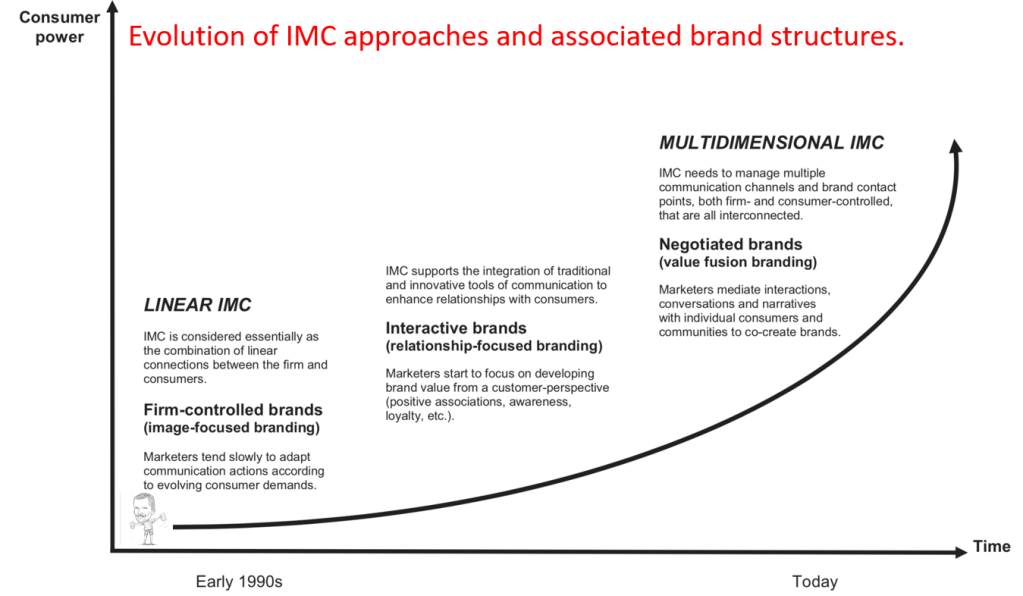
Source: VOLLERO ET AL. (2019)

Based on the Evolution of IMC Approaches and Associated Brand Structures, firms’ (or a marketers’) approach to IMC has evolved as consumer powers increase over the years.

1. Linear IMC – “one-to-many” communications approach, where companies decide on a marketing campaign and broadcast across all channels, without much of the consumers’ opinions and preferences in mind.

2. Interactive Brands (Relationship-focused) – where companies integrate traditional and innovative tools of communication to focus on customer-relationship management.

3. Multidimensional IMC – Businesses managing multiple communication channels, allowing both the brand and the consumers to co-create value for the brand.

With changing consumer preferences and power, businesses grew to realize the importance of integrating consumer-centricism into their branding and marketing communications strategies.


Factors to consider when planning for an integrated IMC

For an IMC to be effective, digital media as well as communication channels need to be aligned in an integrated approach. For that to happen, lets look at the 4Cs.

  • Coherence – having each individual communication channels being logically connected for the brand.
  • Consistency – Multiple messages help to support and reinforce the brand, instead of contradicting each other (speaking in one voice)
  • Continuity – Ability to sustain a consistent communication content throughout
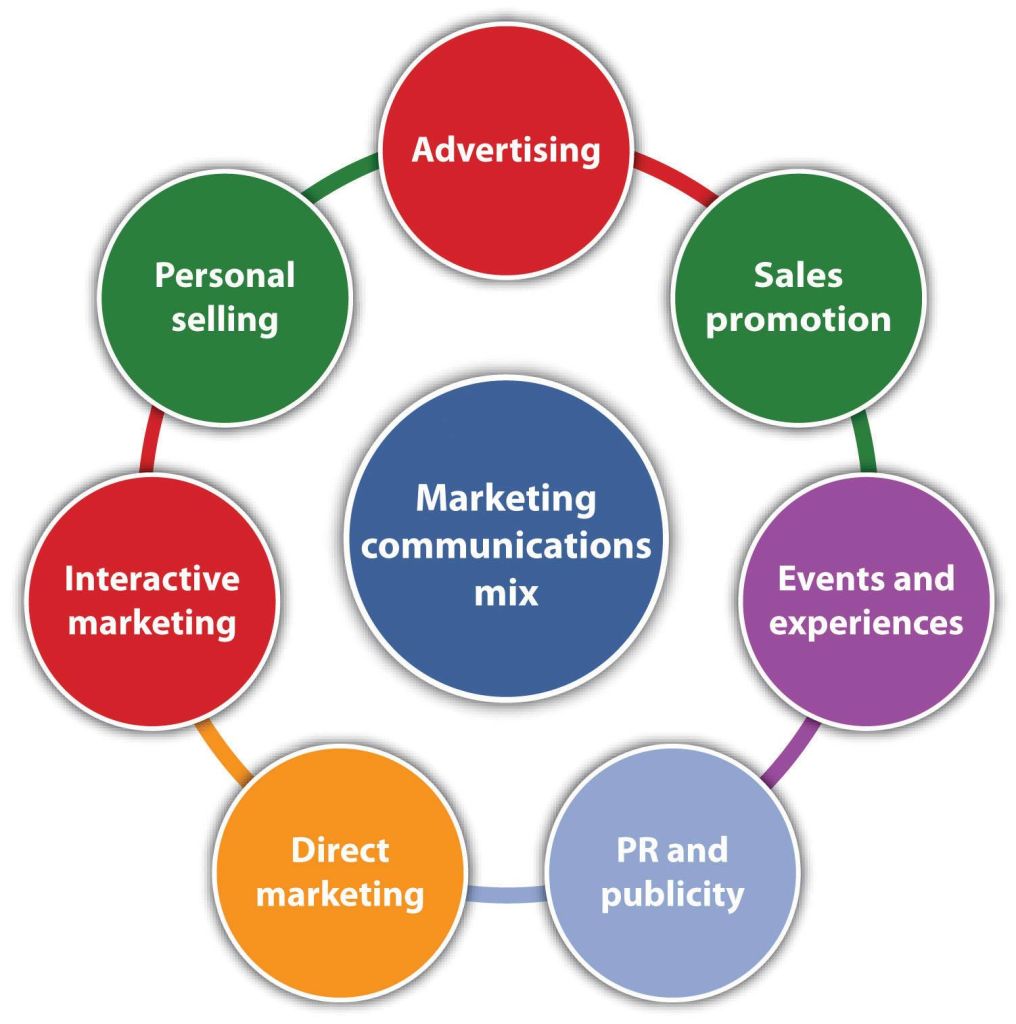
  • Complementary- Each element of the marketing communications mix should work well with each other and combine for maximum efficiency.

Out-of-home Advertising as a tool for Multidimensional IMC

Out-of-home (OOH, what a nice acronym) Advertising refers to any visual advertising media that can be found outside of the home. Some examples would be billboards and signs, ads on street furnitures such as bus stops, train station or even at the cinema!

How do businesses use this as a tool to better increase 2-way value creation and generate performance for themselves? Check out this video below!

Well, there you have it, some innovative ideas to add to your marketing campaign direction, making use of emerging technological trends like 3D, Augment and Virtual Reality, Motion Sensors and even the IoT, overall boosting your engagement value, involving consumers in value creation for your own brand!


I hope this post has helped to give you a whole new perspective of the plethora of marketing tools that will aid you in your conquest to reach out to the world! Have ideas? Drop them below at the comments section!

Search Engine – The Most Powerful Engine in the World

You got it. Search Engine might just be the most powerful engine in the world!

No, I am not talking about engines of the Bugatti Chiron, neither am I talking about Fighter Jet engines! I already know they are fast!

What I am talking about is a virtual, complex system of networks and programs that exists in the realm of the internet and dominates as the first point of contact for all users when they want to access information/contents in its unbounded universe!

I’m talking about Google, Yahoo, Bing and many other Search Engines!


Search Engine?

Search Engines are softwares on the internet that facilitates an end-user’s search enquiry by searching through a database of information!

Among the Search Engine mountains lies the most famous entity – Google, who takes up 70% of the market share, followed by Bing, Baidu, Yahoo, etc.

Search Engines uses a complex system piled with compound algorithms, to pull out information from the gazillion chunks of data lying on the flat empty ground of the limitless virtual field (take a moment to imagine that)

They employ (funny word to use ain’t it) workers called Spiders or Crawlers to search the net automatically, then process and index contents from web pages.

These collected data are then used to rank each of these web pages and determine the ranking outcome of a search enquiry.


Here comes the good stuff…

Marketing/Business enthusiasts, you’ll thank me for this! Knowing about Search Engine and how it works is only the tip of the iceberg, being able to leverage on it for your own business/company, might just be the biggest takeaway you can get from this post! Tune it on the next page!

Innovation You Never Thought You Wanted, But Is Everything You Ever Need.

A mobile phone with access to internet? A digital watch with access to internet? Very common these days, ain’t it?

But did you know that some time back, the only device that can grant us access to tons of information in a matter of seconds with just a simple click, was the Computer?


Welcome to the Digital Age – IoT

Driverless Cars? Wearables, Kitchen Equipment, Furnitures with network? Digital Locks?

Where even the impossible seems pretty doable, where things we use on an everyday basis, can be digitalized, and computized to provide us with a newfound (or better?) way of living, what else can we hope for?


In this post, I will be sharing how the digitalization, or specifically, the Internet of Things, is shaping our world, one product at a time.


What is the Internet of Things (IoT)?

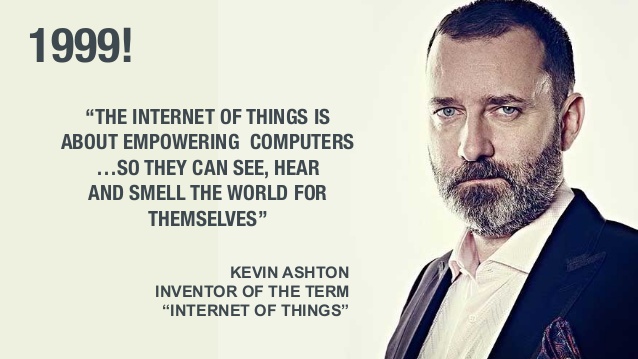
The Internet of Things (IoT), termed by Kevin Ashton, is an ecosystem of physical devices, appliances, even vehicles, that have an ability to access, collect and exchange information over a wired or wireless network. Empowering day to day objects and devices with access to the internet via ubiquitous sensors, to facilitate information collection and exchange.

Source: SlideShare

How does it work?

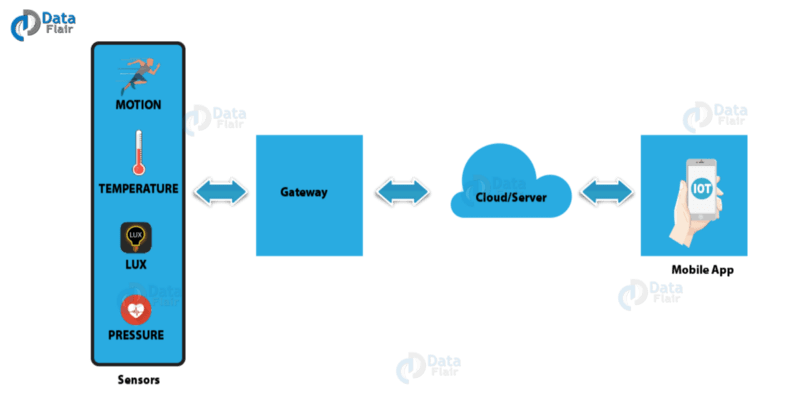
Source: Just Creative

To make it simple to understand, there are 4 main components for the IoT:

1. Sensors/Devices – Sensors and Devices are the main point of contact to collect data from its environment. A smartphone is a great example, it contains multiple features such as GPS, Accelerometer, Camera, which allows it to collect multiple channels of data.

2. Gateway Connection – Once data is collected, the device sends the relevant information to a cloud infrastructure, also known as an IoT platform.

3. Data Processing – Once the data reaches the cloud, it is then analyzed and processed for different kinds of decision making. The analysis can be as simple as checking the temperature of a room, to something more complex such as identifying intruders through face recognition with the help of surveillance cameras.

4. User Interface – With the relevant data converted to information and displayed on the device (e.g. smartphone application), an end-user can then choose to make the decision to tune its setting or to monitor the situation!

For more detailed information about the IoT, do check out
Just Creative Blogs!


Innovation – Everything You Ever Need?

Well, if this is what you came for, let me introduce some innovations that you might or might not have known, that are probably going to integrate into our everyday living, sometime in the future!

1. Smart Home

Using a digital lock to control access to your house through a passcode or fingerprint scanner, controlling your home lighting, sounds, the blinds, with just a click on your smartphone. From the Google Alexa Mini Speakers to the Samsung Smart Home Refridgerator, there are just too many products available to ease your needs with living! Below is a video that illustrates the endless possibilities of the IoT!


2. Wearables

Smart watches like the Apple Watch, Fitness tracking bands like Fitbit are getting increasingly popular in the digital tech markets, with more and more people adopting these devices into their routine – you can pay, make phone calls, track your health, etc with these little devices that you carry with you on your way to work!

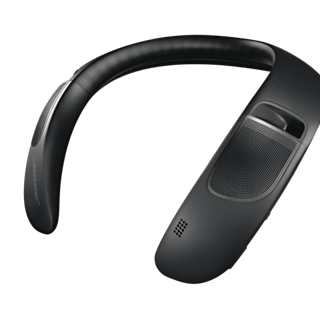
Bose SoundWear Companion Speaker allows its users to use them hands and ears free, they allow users to be present with music and their surroundings, maximizing the sound quality for its users and minimizing the sound for others.


3. Smart Cities

Can you imagine a city powered by Artificial Intelligence? Driverless cars around the area, controlled traffic, all connected to a centralized network, seems pretty futuristic right? Something like this?

Source: Medium

Well, not quite, but lets not limit our possibilities! I was talking about something more along the lines of this!


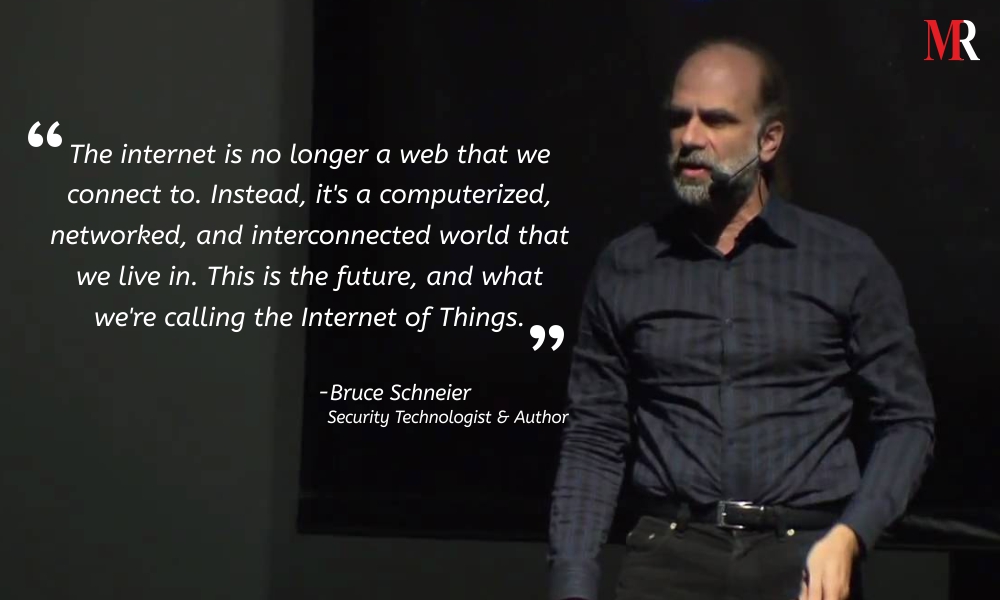
Source: Mirror Review

In less than 2 decades, we saw the evolution of technology spurt across the world, and the IoT might just be the biggest thing to happen for us. Can you imagine a world where all households will incorporate smart home systems, driverless cars moving about everywhere, a society empowered by digitalization, all connected across multiple networks?

New Innovations? Contact Lens with internet access? A earpiece that allows you to hear from 3,000miles? We never know, but we sure need to be ready for the change though, just like how smartphones topped across the world in less than a year and became something we can’t live without.

Have more ideas for innovations? List them down below in the comments section!

Mobile Marketing – Why It Matters

Ahhh… Mobile Marketing, such an underestimated but strong platform that businesses fail to capitalize on these days.


Narrative

It is 8.30am on a dreading Monday morning.
You, a typical millennial on your way to work, plugging in your favourite playlist on Spotify on your phone and looking out the MRT cabin, thinking about what to eat for lunch, or what to do after work.

Somehow or rather, be it feeling bored or habitual, you decided to whip out your smartphone and start scrolling on Instagram, Facebook, Twitter or watch your favourite Kdramas like the rest of the crowd on the same cabin as you – engrossed on this little device that seems to hold so much weight in your lives.

As you were scrolling through your Instagram story, you were rudely interupted by an advertisement of this new watch brand featuring their watches and its aesthetics, you wonder to yourself – “Hey, I was literally searching for watches to gift for my friend the other day, this ad seems to come out just in time!” or “Am I being watched? How did they know what I was looking for?”

Well, every action you make online, everywhere you go, you are constantly leaving bits and pieces of yourselves on the internet, Google takes in these useless data and translates them into information, for businesses to leverage on them for different uses – mostly for marketing/research purposes, relax.


In this post, we will dive into the details of what mobile marketing is, how much of an impact it is creating in our lives and for our future, and steps that businesses can use to achieve mobile marketing success.


What exactly is Mobile Marketing?

Mobile Marketing, in its essence, is a multi-channel, digital media strategy aimed for delivering marketing content to end-users through their mobile phones, tablets and other mobile devices. Common platforms for mobile marketing includes:
– Websites
– Emails
– Social Media (Whatsapp, Telegram, Instagram, Facebook, etc)
– SMS/MMS
– Apps

Impact of Mobile Internet

Did you know that there are close to 8 billion (7.8 billion to be exact) people in the world, more than half (4.33 billion) of them uses the internet, and 80% of these internet users have smartphones?

It is also reflected on Statista that the Mobile internet traffic takes up more than half (51.98%) of the Total Global online traffic. This goes to show how much of an impact mobile internet is making across the world!!

So what has it got to do with marketing/business? you asked. Well, you see, it is important for businesses to recognize the different channels of distribution that they can use to put themselves out there. Since more and more people are gradually shifting to mobile internet, businesses also need to understand how to use these platforms to deliver marketing contents to their intended users effectively.

How?

Well, since you asked, I’ll be more than happy to share how businesses can achieve mobile marketing success! Page 2, click away!!

3 Incidental Viral Campaigns that proves why Viral Marketing Sells

Harlem Shake, Pokemon GO, McDonald’s Nasi Lemak Burger, sounds familiar, don’t they?

In this post we are going to look at some of the few unique ideas that were able to sell, despite being irrational and sometimes, foolish. Why do some get ideas get people talking, or rather, moving?


1. ALS Ice Bucket Challenge

Do you remember the iconic period where you get to see videos of your favourite celebrities like Dwayne Johnson, Will Smith, Lady Gaga, holding a bucket of ice water and then dunking it on themselves? Exciting right!!

But the underlying rationale behind this Ice Bucket Challenge craze serves a more meaningful purpose than you think (it’s not always about fun, my dear).

The ALS Ice Bucket Challenge was created to raise money and awareness to fund the research and medical efforts towards a disease – Amyotrophic Lateral Sclerosis, or more commonly known as Lou Gehrig’s disease. ALS is a degenerative illness that causes the loss of muscle control, and ice water stimulates an experience of muscle stiffness that relates to how ALS patients feel.

Well, now you know! For more information or to donate, please visit the ALS Association website

2. Old Spice

Ahh…The good ol’ Terry Crew features… Do you think this advertisement makes sense? Or does it resonate with the brand Old Spice?

The ad agency responsible for this project saw the window of opportunity – a new level of interaction where people can be part of the creative process, that could possibly provide a glimpse into the future of advertising.

Interesting? Indeed.

Old Spice has consistently been very creative with their marketing efforts, this is yet another viral video of theirs, where you can create your own “Muscle Music”.

*Editors Note: I would be really excited to share with you this interactive feature that the ad offers on Vimeo but unfortunately, the feature has been removed. (Aw man!)

3. Dollar Shave Club

Wow.

Short, sweet, impactful. What’s more to say?

Dollar Shave Club’s Founder, Michael Dubin came up with an intriguing idea to use humor as an approach to their debut video, which went… really f**king great. What seemed like an impromptu, effortless short video was in fact, a highly planned effort.

So, here’s the golden question. Why does Viral Marketing Sell?

Stick with me to the next page, and lets do a quick go-through of Viral Marketing Theories by Jonah Berger and Malcolm Gladwell, I promise a fulfilling knowledge you will learn at the end of the day! (psst I might even throw in a gift or two for you at the end of the post!)

Create your own website, free on WordPress.com.Create your own website.
Start free